
A Norfolk pine natural touch garland works best when it is allowed to behave less like a formal decoration and more like loose greenery responding to the architecture of a room. Its soft, irregular branches create movement, layered texture, and a relaxed drape that can suit both quiet modern interiors and richly traditional Christmas rooms.
The most convincing arrangements rarely depend on more ornaments. Instead, they use proportion, asymmetry, and a restrained mix of materials—brass, wood, pottery, pinecones, dried citrus, linen, or velvet—to let the greenery remain the dominant element. The ideas below show how to carry that approach across fireplaces, windows, archways, consoles, kitchens, and several very different interior styles.
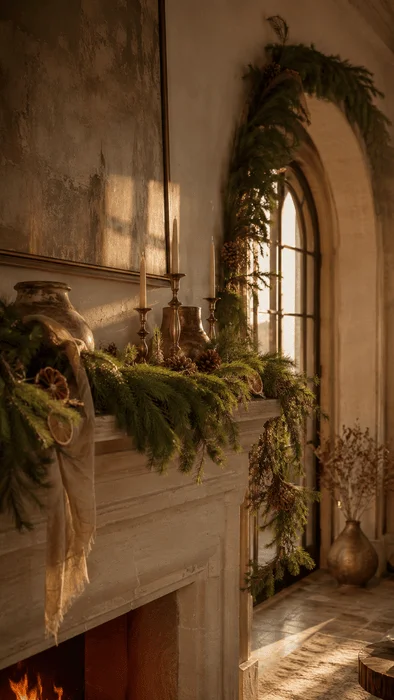
Styling Norfolk Pine Garland at a Glance
Best places: mantels, consoles, windows, archways, shelves, and kitchens.
Best companions: brass, aged metal, natural wood, pottery, pinecones, dried citrus, and soft ribbon.
For a more natural look: keep the branches uneven, leave some negative space, and limit the number of decorative ingredients.
Norfolk Pine Natural Touch Garland Decorating Ideas
The strongest garland arrangements begin with the line that already exists in the room. Rather than forcing every strand into the same symmetrical Christmas formula, let the mantel, opening, shelf, or window determine where the greenery sits and how far it falls.
Norfolk Pine Garland on the Fireplace Mantel
Keep a White Mantel Soft and Natural
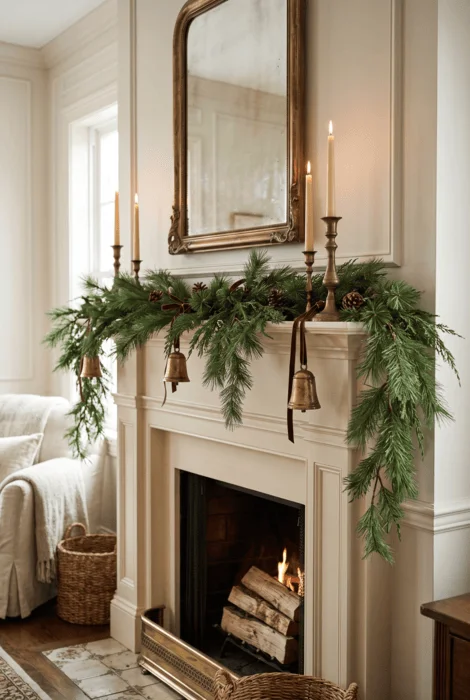
On a pale mantel, deep green foliage already supplies enough contrast to define the fireplace. The brass candlesticks and hanging bells work because they repeat a finish that belongs to the room rather than introducing a completely separate holiday palette.
The side drops are also uneven. That small lack of symmetry makes natural-touch greenery feel less manufactured and gives the eye a clear path from the mirror down toward the firebox.
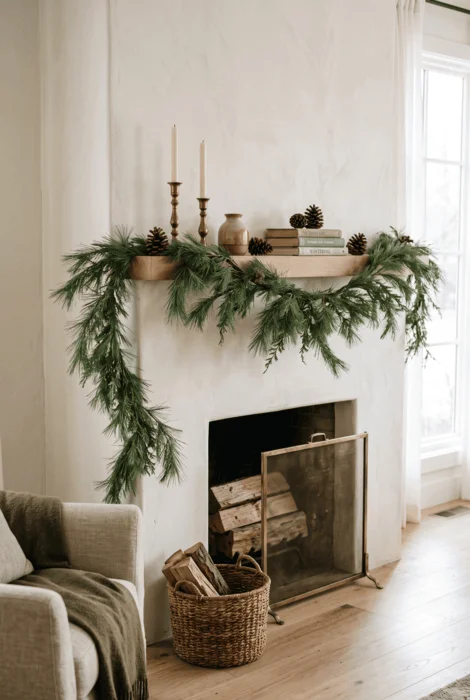
This quieter version shows how little is actually required. Pinecones, two candlesticks, a small vessel, and a few books provide enough variation in height without covering every inch of greenery.
That restraint is especially useful for lighter living room decorating ideas, where the seasonal layer should not overwhelm the furniture or architecture.
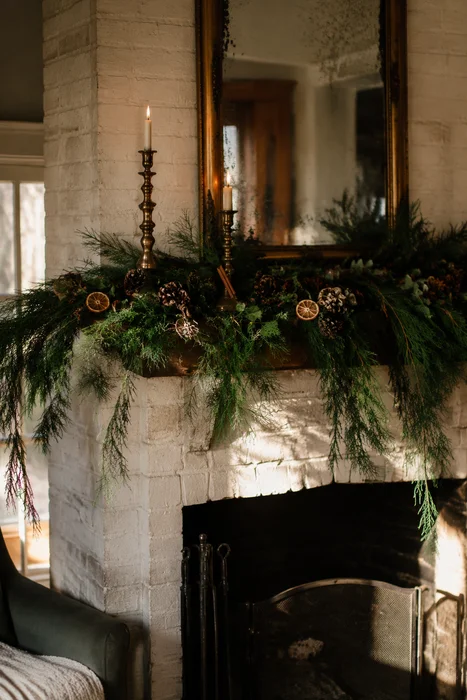
The dried citrus is concentrated in small areas rather than distributed evenly. This keeps the garland’s silhouette visible and allows the aged mirror and brass to carry some of the visual interest.
See how the greenery reads from close detail to the full white mantel arrangement.
Add Dried Citrus, Pinecones, and Cinnamon Sparingly

This close view explains why the combination works. Dried orange brings a muted warm tone, pinecones repeat the branchy texture, and cinnamon adds another brown note without introducing a new color family.
The useful lesson is placement: treat these ingredients as punctuation. Small clusters look more convincing than perfectly spaced decorations on every branch.
Let the Garland Cascade Beyond the Mantel
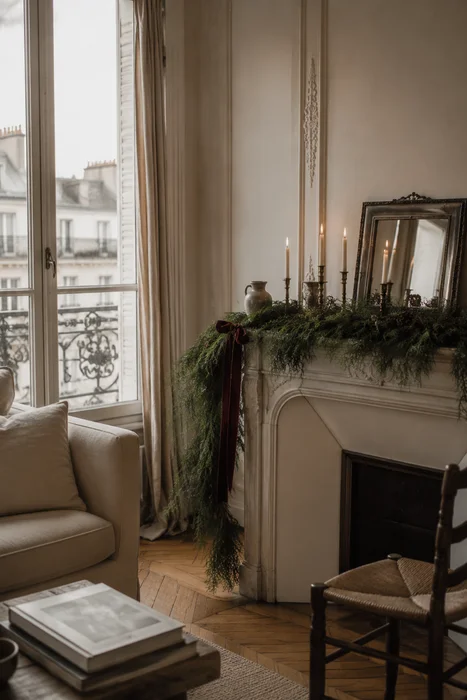
A tall room can support a long vertical drop because the garland is balancing more than the width of the mantel—it is also responding to the height of the mirror, window, and moldings. On a smaller surround, the same approach would feel better with a shorter fall rather than simply adding more foliage.
Use a Fuller Garland in a Rustic Fireplace Setting
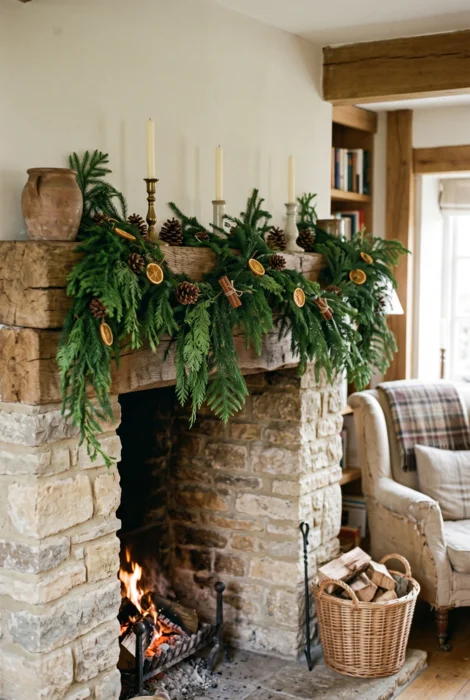
Textured stone and a substantial timber mantel give this composition enough weight for more greenery and more accents. Citrus, cinnamon, pinecones, pottery, and candlesticks still remain within a narrow natural palette, while the woven firewood basket repeats texture lower in the room.
For more seasonal combinations built around natural materials, browse HOMUSA’s Christmas decorating ideas.

Frame the Architecture with Norfolk Pine Garland
Garland does not need a fireplace to feel anchored. Windows, arches, and structural beams already provide strong lines to follow, which often makes the styling look more integrated and less like an accessory added at the end.
Follow the Shape of an Arch
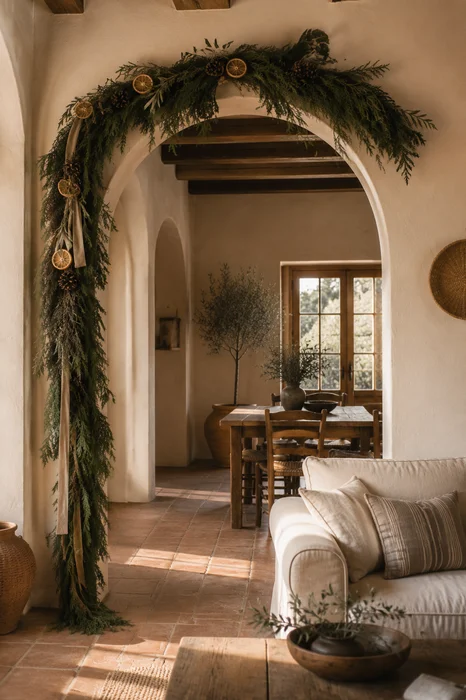
The long drop is especially effective because it continues the architectural line almost to the floor. Leaving the opening itself clear preserves the view into the dining area and prevents the decoration from making the passage feel narrow.
Frame a Window Instead of Covering It
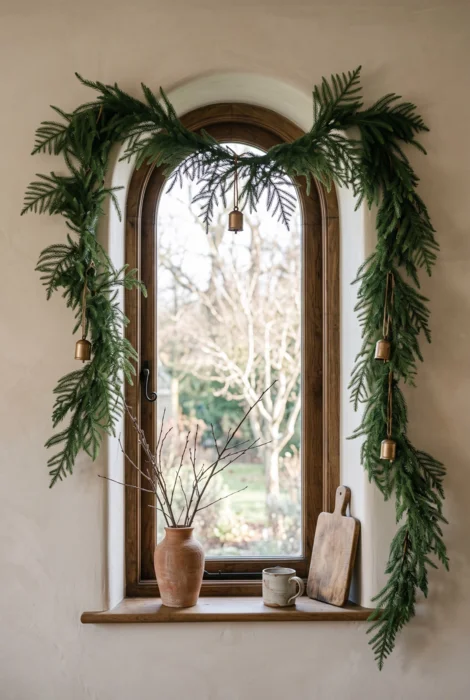
The negative space matters as much as the greenery. Foliage sits along the outer edge, while a few bells create vertical rhythm without filling the glass. This is a useful approach for narrow or tall windows where too much decoration could quickly block light.
Use Garland Around Kitchen Windows
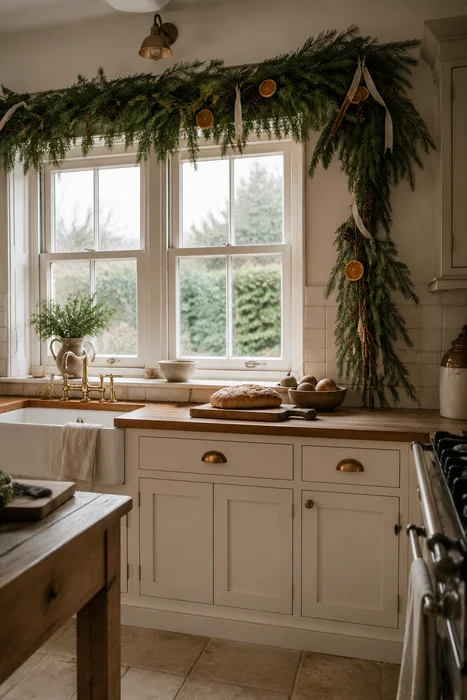
The garland works here because it stays at the perimeter of activity. It echoes warm wood and brass but does not interfere with cabinet doors or the countertop. When decorating a frequently used kitchen window, keep movable sections and practical sightlines clear.
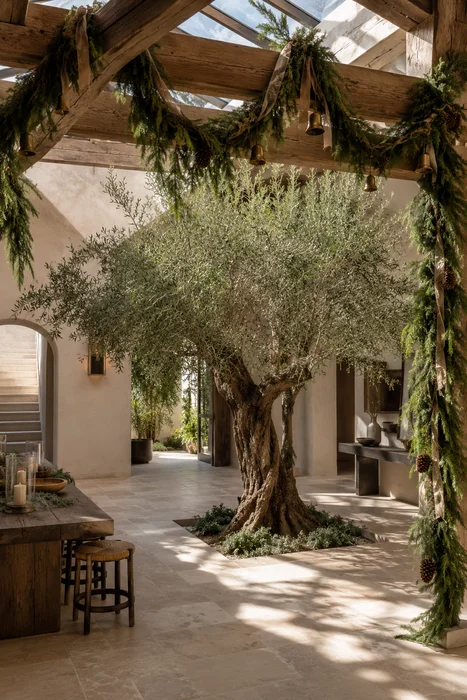
This larger-scale room offers a different lesson in proportion. The greenery follows the beam structure overhead, and the repeating bells establish a rhythm across the width of the space. The substantial olive tree remains the central feature because the garland frames the architecture rather than competing for attention.
Norfolk Pine Garland Beyond the Fireplace
Let the Garland Fall from One Side
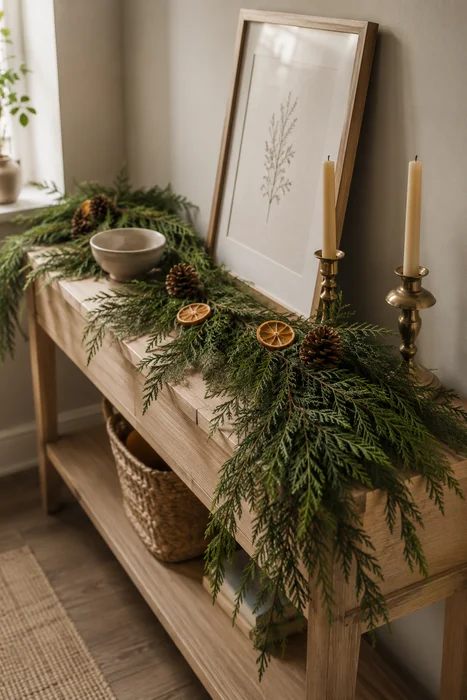
A console does not need fireplace symmetry. The framed botanical art, bowl, candlesticks, and basket already create different heights, so the asymmetric greenery feels connected to objects that belong in the room year-round.
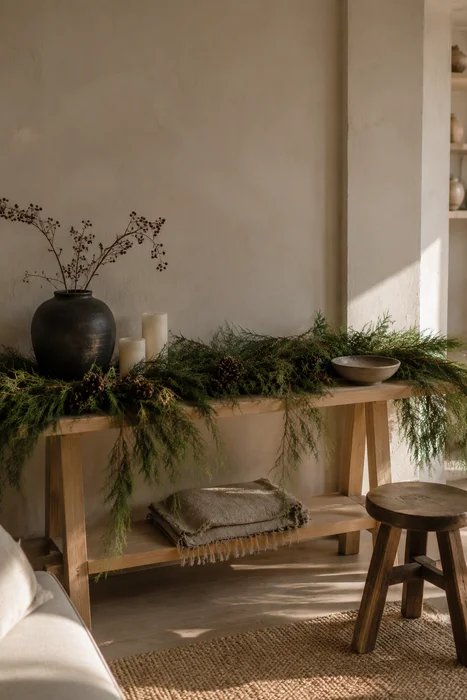
Here, there is almost no overt Christmas ornamentation. The contrast comes from dark pottery against pale plaster and wood, while the garland is allowed to hang irregularly. That makes the seasonal layer feel quiet rather than themed.
Layer Garland with Objects Already in the Room
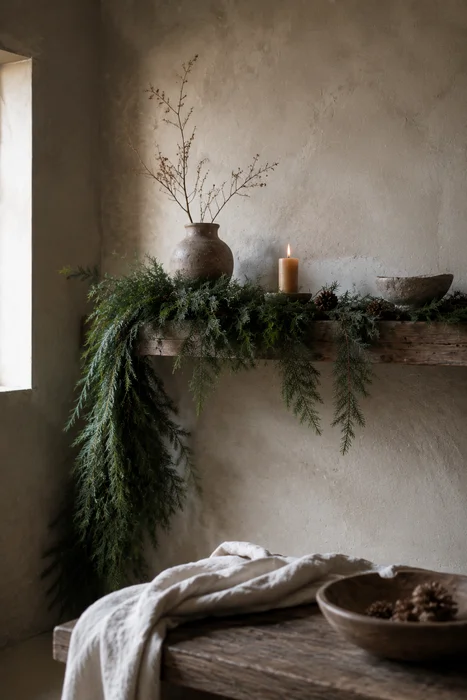
The strongest idea here is integration. Instead of surrounding the garland with unrelated holiday accessories, the styling repeats the shelf’s wood, matte pottery, and neutral textiles.
The next sequence shows how a restrained piece of greenery can build into a complete arrangement without changing its basic visual language.
How Norfolk Pine Garland Changes with the Room
The greenery itself can remain remarkably consistent. What changes its character is the material palette around it—dark timber makes it traditional, plaster makes it quieter, brick sharpens it, and pale wood pushes it toward a more organic look.
Traditional Rooms Can Carry More Visual Weight
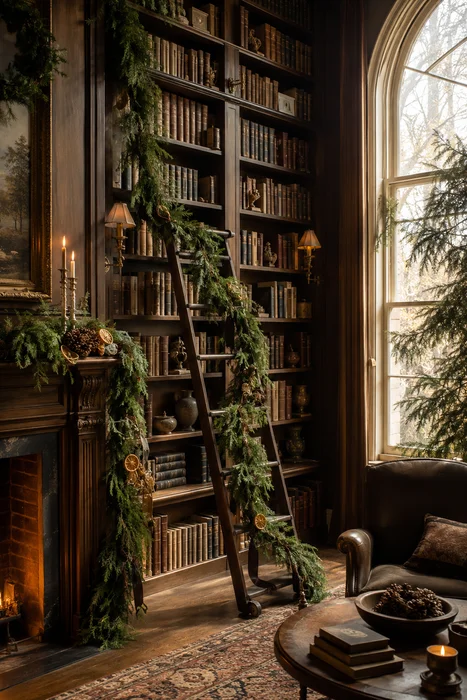
In darker traditional interiors, fuller greenery feels proportionate because the room already contains visual density. The garland can travel farther—across the mantel, shelves, and ladder—without appearing excessive.
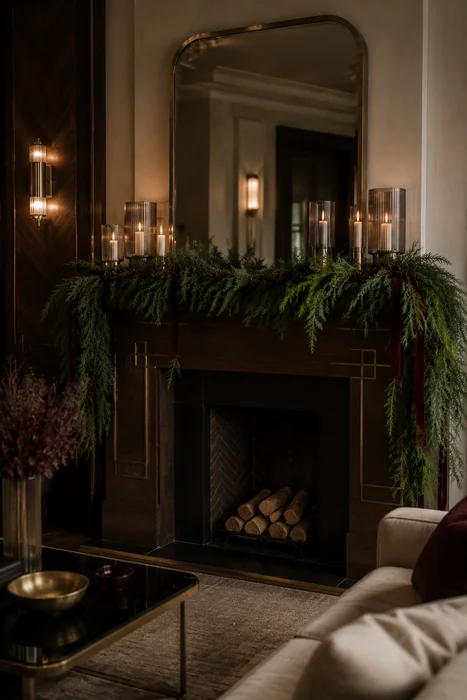
The deep wood surround does not need colorful ornamentation. A few burgundy ribbons and warm reflections are enough to separate the green foliage from the dark background.
Modern and Industrial Rooms Need a Clearer Edit
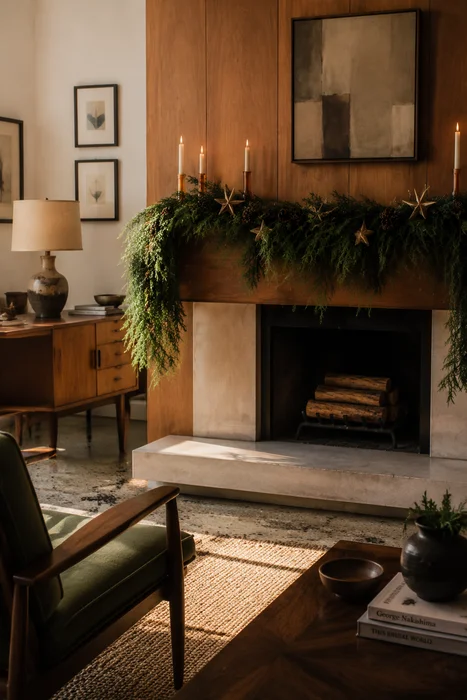
In modern interiors, fewer accessories usually make the greenery more convincing. Repeating the room’s wood tones and limiting ornament keeps the garland from becoming visually detached from the furniture.
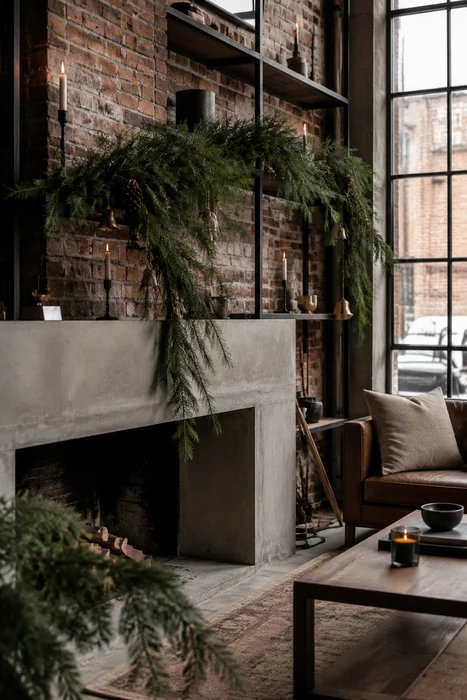
Against brick and black metal, the same lifelike greenery feels less traditional because the surrounding materials are harder and more graphic. Bells and candles work best here when their finishes stay dark or aged rather than polished and decorative.
Pale, Organic Rooms Benefit from Restraint
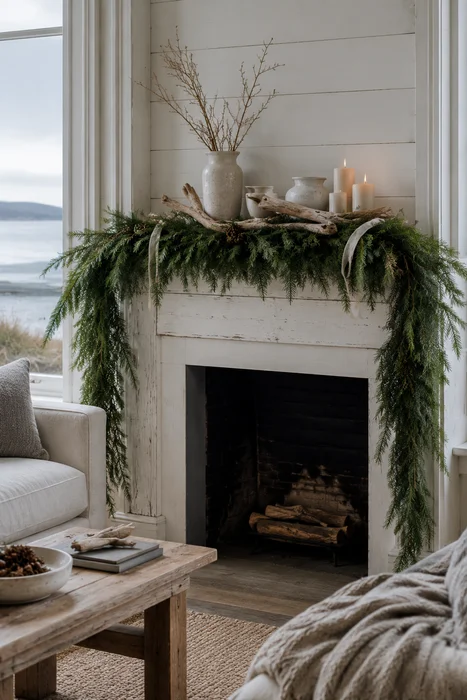
For coastal interiors, natural ceramics, driftwood, linen-like textiles, and soft neutrals are enough to change the mood. There is no need to make the garland itself “coastal”; the room already does that work.
Norfolk Pine Garland in the Kitchen
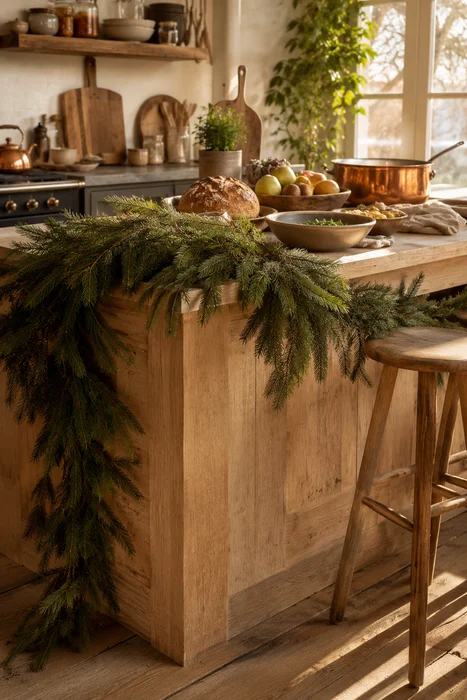
Kitchen greenery should sit around the edges of activity, not in the middle of it. Avoid cabinet doors, active burners, and heavily used food-preparation zones. A counter end, window surround, or architectural edge is usually easier to live with.
Warm wood, copper, brass, cream cabinetry, and natural stone all sit comfortably beside the green foliage. More room-specific examples can be found in HOMUSA’s kitchen decorating ideas.
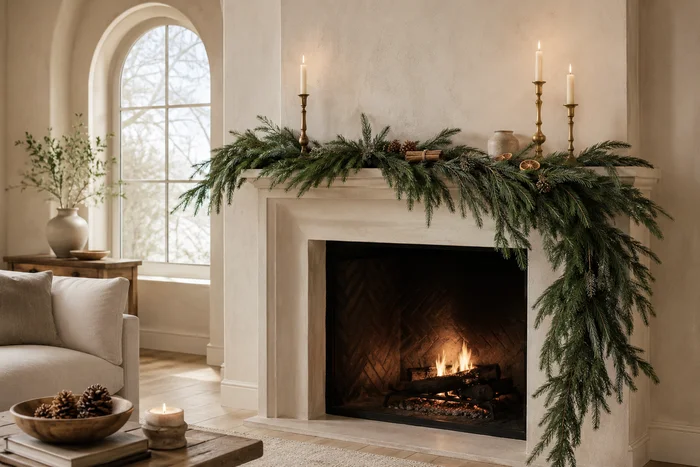
This final visual transition shows how the same greenery can move from simple to layered without requiring an entirely different decorating language.
How to Style Norfolk Pine Natural Touch Garland
Start with the Architecture
Establish the overall line before adding ornaments. Run the garland along the mantel, arch, window, console, or shelf and decide where the weight should sit. Once that underlying shape feels right, smaller accents become much easier to place.
Create an Uneven, Natural Drape
Separate and bend compressed branches, keep different lengths visible, and let some foliage overlap loosely. Slightly uneven drops and small areas of negative space usually make natural-touch Norfolk pine garland look more believable than perfect geometric loops.
Limit Yourself to Two or Three Accent Families
Try dried citrus + cinnamon + pinecones, brass bells + velvet ribbon, or candles + pottery + wood. Choosing a small material family preserves the silhouette of the greenery instead of burying it beneath decoration.
Repeat Materials Already in the Room
If the room already contains brass, dark timber, pale oak, stone, linen, pottery, or black metal, repeat one or two of those materials around the garland. Seasonal decor feels more integrated when it borrows from the permanent room rather than introducing an entirely new finish palette.
How to Make Norfolk Pine Garland Look More Natural
- Separate and bend the branches. Do not leave the garland compressed from storage.
- Keep different branch lengths visible. The uneven silhouette is part of what makes realistic evergreen garland convincing.
- Avoid perfect ornament symmetry. Place accents in small, irregular groups.
- Leave some foliage undecorated. Empty areas give the eye somewhere to rest.
- Mix textures more than colors. Wood, metal, ribbon, pinecones, and dried citrus create depth without visual clutter.
Choosing the Right Garland Length
Measure the horizontal decorating surface first, then add the amount of side drop you want before choosing a length.
A 60-inch natural-touch Norfolk pine garland may work well on a smaller mantel or console, while wider surfaces or dramatic side cascades may require more length or layered strands. The useful measurement is the composition you want to create—not the mantel width alone.
A Quick Safety Note
Keep decorative greenery away from open flames, active fireplace openings, burners, hot surfaces, and excessive heat. Follow the manufacturer’s directions for artificial greenery and candle products, and use flameless candles when safe spacing around real flames is difficult.
Frequently Asked Questions
How do you make Norfolk pine natural-touch garland look more realistic?
Open and bend the branches individually instead of leaving the strand compressed. Keep different branch lengths visible, avoid identical loops, and place decorations in small irregular clusters. Leaving some sections undecorated is just as important as adding accents because visible foliage preserves the natural-looking silhouette.
Where can you use Norfolk pine garland besides a fireplace mantel?
Consoles, floating shelves, archways, window frames, kitchen windows, beams, and long furniture surfaces can all work well. The best placements usually have an existing horizontal or architectural line for the garland to follow, which makes the greenery feel intentional rather than attached to an arbitrary surface.
What decorations look best with Norfolk pine garland?
Pinecones, dried citrus, cinnamon, pottery, aged brass, bells, wood, linen, taper candles, and velvet ribbon all pair naturally with the deep green foliage. Choose only two or three accent families at once. A restrained palette usually makes a thick garland look more considered than a larger mix of ornaments and colors.
How much Norfolk pine garland do I need for a mantel?
Measure the mantel width and add any side drop you want. A shallow arrangement needs less material than a full cascade, and a broad fireplace may need more than one strand. There is no single ideal length, so plan the shape first and choose enough garland to create that drape without compressing the branches.
Final Thoughts
The most convincing seasonal rooms depend less on the number of decorations than on proportion, natural texture, repetition, and the way decor responds to the architecture. Norfolk pine-style greenery works especially well because it can remain understated: a loose strand on a console can feel as considered as a layered fireplace.
Let the foliage keep some irregularity, repeat materials already present in the room, and stop before every branch is decorated. That restraint is often what makes the finished space feel more personal and lived in.
For more HOMUSA home decor inspiration, explore seasonal decorating ideas and room-by-room approaches built around thoughtful, livable design.

